
Downy Mildew in Roses: Protecting Your Investment from the Most Costly Disease
The morning inspection should have been routine. Instead, you're staring at irregular purplish-red blotches spreading across premium rose leaves—the unmistakable symptoms of downy mildew. Within days, if left unchecked, these spots transform into gray, fuzzy patches, and export-quality blooms become unmarketable rejects. For Kenyan rose growers supplying EU and Middle East markets, downy mildew caused by Peronospora sparsa represents one of the most devastating threats to productivity, capable of destroying 15–25% of crop yield in severe outbreaks.
Understanding this disease is the first step toward effective control. Unlike true fungi, Peronospora sparsa is an oomycete pathogen that thrives in cool, humid conditions common in rose-growing regions. The pathogen flourishes when relative humidity exceeds 80%, with prolonged leaf wetness providing ideal infection conditions. These environmental factors, combined with the pathogen's rapid reproduction cycle, explain why downy mildew can explode from a few isolated spots to greenhouse-wide devastation in less than a week.
Recognizing Downey mildew
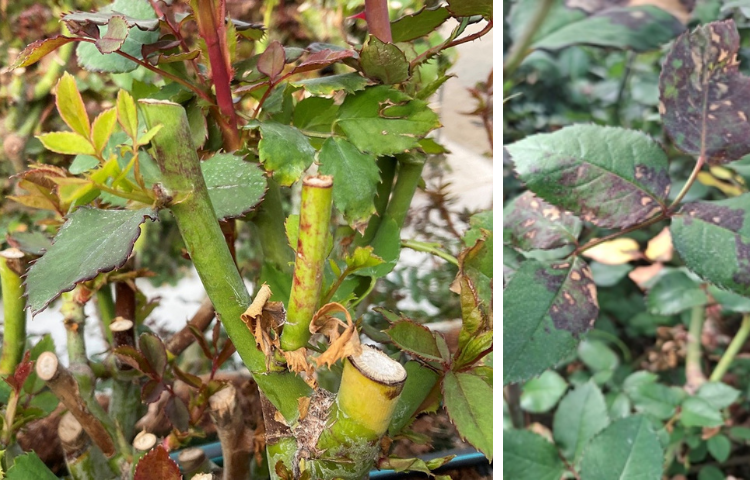
Early detection makes the difference between minor inconvenience and major crop loss. Initial symptoms appear as small, irregular spots on the upper leaf surface, typically purplish-red to brown in color and angular in shape, as they follow leaf veins. These early lesions are often accompanied by yellowing tissue around the infected areas. However, the diagnostic feature that confirms downy mildew appears on the leaf undersides—a characteristic gray-purple, fuzzy growth consisting of thousands of sporangia ready to spread the disease throughout your greenhouse.
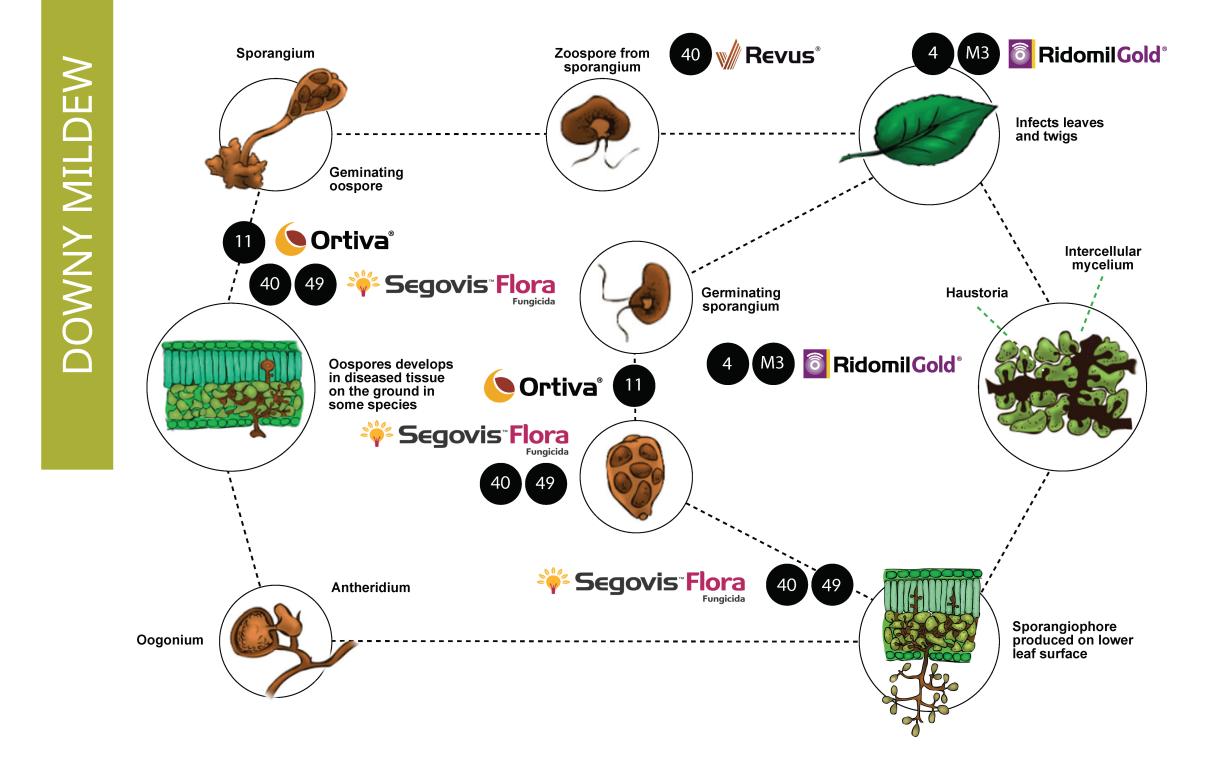
As infection progresses, leaves curl, distort, and drop prematurely, weakening plants and reducing flower quality. Stem infections manifest as purple-black streaks, while severe cases can affect buds and flowers directly, rendering entire stems unsaleable. The challenge for growers is that by the time these obvious symptoms appear, the pathogen has already established itself, making control more difficult and expensive. This is why preventive strategies prove far more effective than reactive treatments.
The Economic Reality
The financial impact of downy mildew extends beyond immediate crop losses. Export rejections damage farm reputations in the market, potentially affecting future contracts. Quality downgrades force growers to discard stems entirely. Increased fungicide applications drive up production costs, while labor expenses rise as workers rogue out infected material and implement additional sanitation measures. Downy mildew management directly impacts profitability. On average, growers set aside 15–20% of their annual crop protection budget for downy mildew control, making it a business-critical issue requiring comprehensive management strategies.
Integrated Management Approach
Successful downy mildew control requires combining cultural practices, environmental management, and strategic fungicide applications. Cultural practices form the foundation of disease prevention. Optimize greenhouse ventilation to reduce humidity and minimize leaf-wetness duration. Space plants adequately to improve air circulation. Implement rigorous sanitation by immediately removing and destroying infected plant material, and sterilize tools between uses to reduce disease transmission.
Environmental controls become particularly important during high-risk periods. Monitor temperature and humidity levels continuously, adjusting ventilation to maintain conditions unfavorable for disease development. During rainy seasons or periods of persistent cloud cover, when humidity naturally increases, intensify monitoring and adjust spray programs accordingly.
Regular scouting enables early detection when control measures prove most effective. Focus attention on indicator plants and areas with historically higher disease pressure, such as poorly ventilated corners or sections with dense canopy growth. Document findings systematically to track disease trends and evaluate management program effectiveness.
Strategic Fungicide Programs
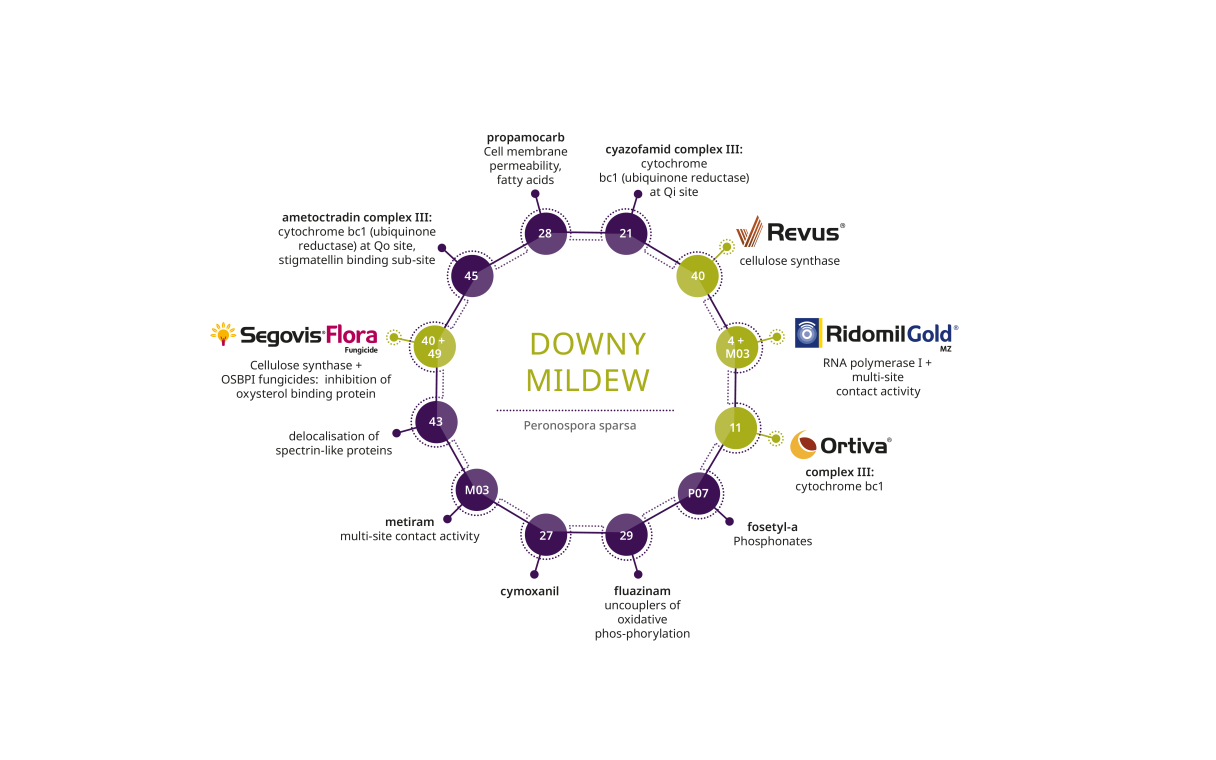
While cultural and environmental controls reduce disease pressure, fungicides remain essential for reliable protection, especially during periods of high disease risk. However, not all fungicides deliver equal performance, and resistance management must guide product selection and rotation strategies.
SEGOVIS® FLORA has emerged as a highly effective solution for downy mildew management in rose production. This advanced fungicide combines two active ingredients—oxathiapiprolin and mandipropamid—providing dual modes of action (FRAC groups 49 and 40) that deliver both preventive and curative activity. The product's translaminar and systemic movement ensures protection of new growth and hard-to-reach leaf surfaces, while its exceptional rainfastness maintains efficacy even under challenging weather conditions.
Applied at 0.7 litres per hectare, SEGOVIS® FLORA provides up to 21 days of residual protection, allowing growers to maintain effective disease control with fewer applications compared to ordinary grower practices. This extended protection period proves particularly valuable during peak disease pressure, when frequent re-entry for spraying becomes logistically challenging and economically burdensome.
Effective resistance management requires rotating FRAC groups. Integrate SEGOVIS® FLORA with other registered fungicides such as RIDOMIL GOLD®, REVUS®, and ORTIVA® based on disease pressure and weather conditions. Vary the spray interval between 7–10 days depending on weather conditions and disease pressure—continuous leaf wetness, temperatures in the optimal range for pathogen development, and relative humidity above 80%.
Avoiding Common Pitfalls
Many growers inadvertently undermine their disease management programs through preventable mistakes. Waiting for visible symptoms before initiating fungicide applications allows the pathogen to establish, requiring more intensive and expensive control measures. A poor spray program—using only one fungicide throughout the season—accelerates resistance development, eventually rendering that product ineffective. Neglecting environmental management while relying solely on chemical control addresses symptoms rather than the underlying conditions favoring disease development.
Moving Forward
Downy mildew doesn't have to threaten crop productivity. By understanding the pathogen's biology, implementing integrated management strategies, and using effective fungicides like SEGOVIS® FLORA as part of a comprehensive program, rose growers can consistently produce premium-quality flowers that meet demanding international standards. Success requires vigilance, systematic monitoring, and proactive intervention—but the investment in proper disease management pays dividends through higher yields, better quality, and stronger market relationships.
Your roses represent a significant investment in infrastructure, labor, and expertise. Protecting that investment from downy mildew ensures sustainable production and maintains your reputation as a premier supplier of world-class cut flowers.
For personalized downy mildew management recommendations for your farm, contact Syngenta's technical team. Our agronomists can help design spray programs tailored to your specific conditions and production systems.